“…nor deny to any person within its jurisdiction the equal protection of the laws.”
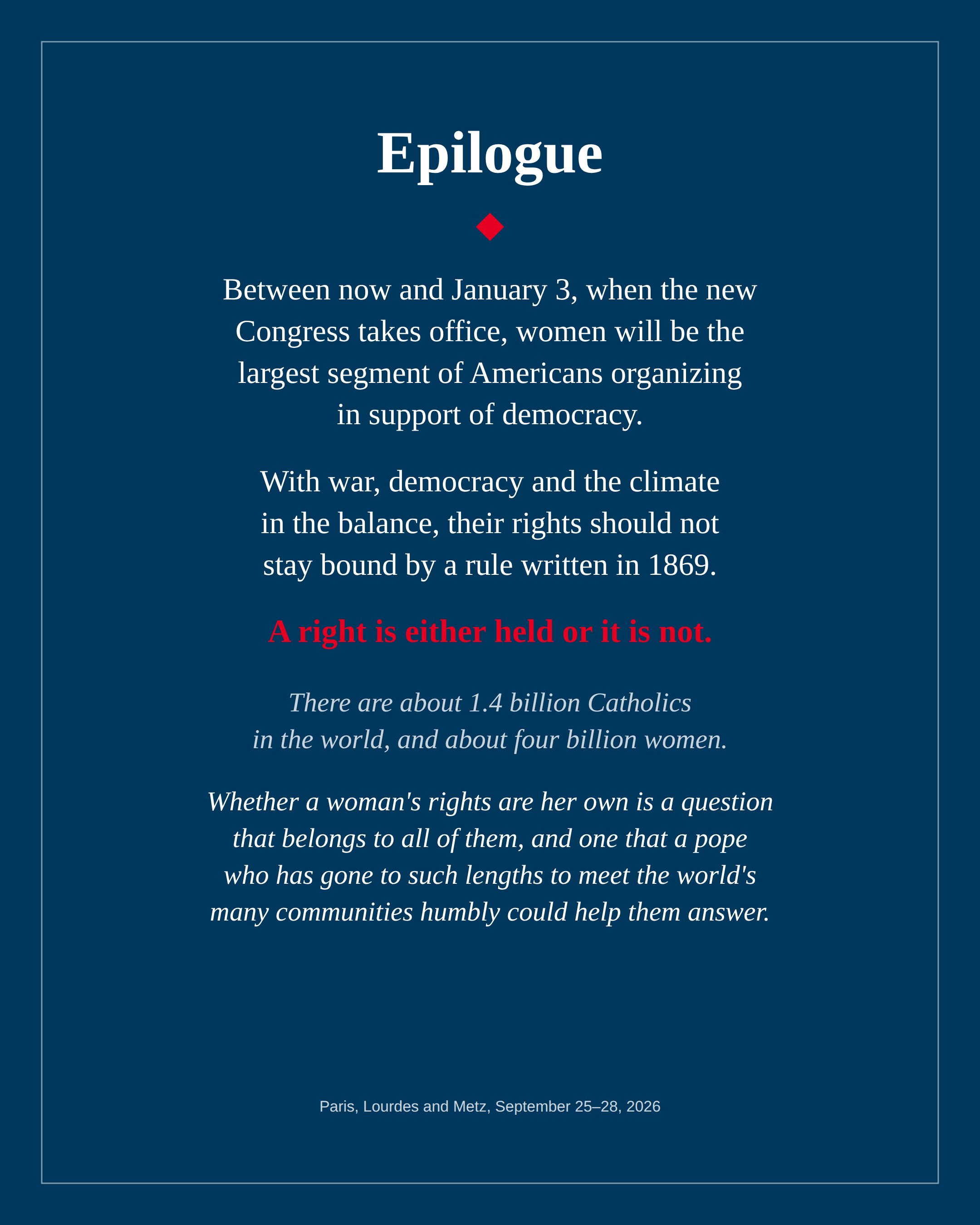
The Pope chose his name, and wrote his first encyclical, with artificial intelligence and work in mind, and that argument would carry great weight even if nothing else were at stake. Our moment in time finds far more at stake, with the war in Ukraine, the fragile ceasefire in Gaza and the war with Iran, democracy on the line in the country of the Pope’s birth, and ocean temperatures near the brink. Whether those wars slow or spread will turn, more than anyone outside America likes to say, on who holds Congress after January 3. Catholics everywhere, and people the world over, have a stake in the same three months. With that much in the balance, the rights of women and the work that is theirs should not stay bound by a rule written in 1869, in the age of the first great industrial revolution. A right is either held or it is not, and for the workers’ pope to leave that rule in place would risk abandoning women at the moment their weight could tip the scales.
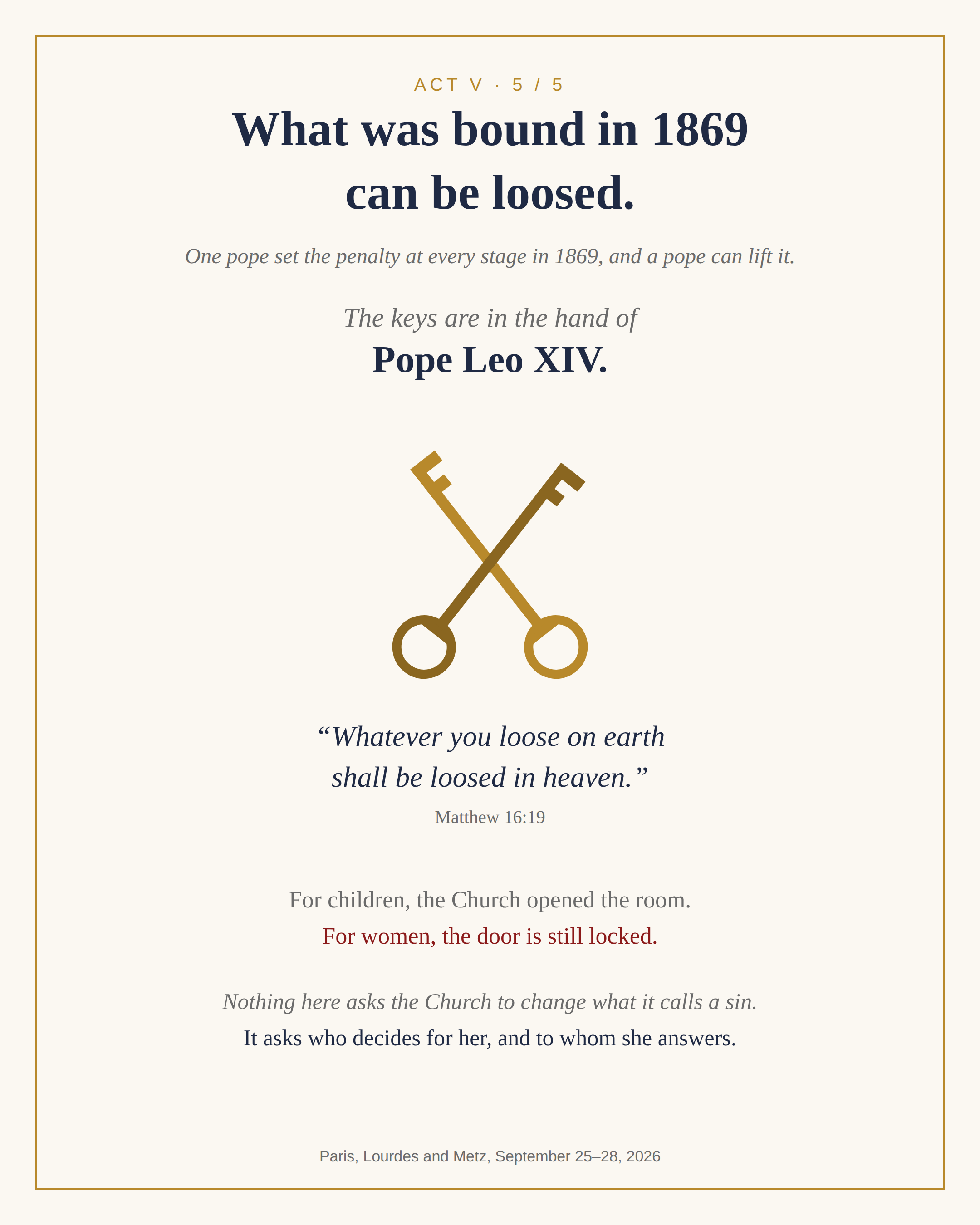
Lord, you gave Peter the keys to loose as well as to bind, so how long will the women of your Church wait for what was bound in 1869 to be loosed?
The cards are the case for. These are the objections it expects, and the answers.
"The Church has always condemned abortion."
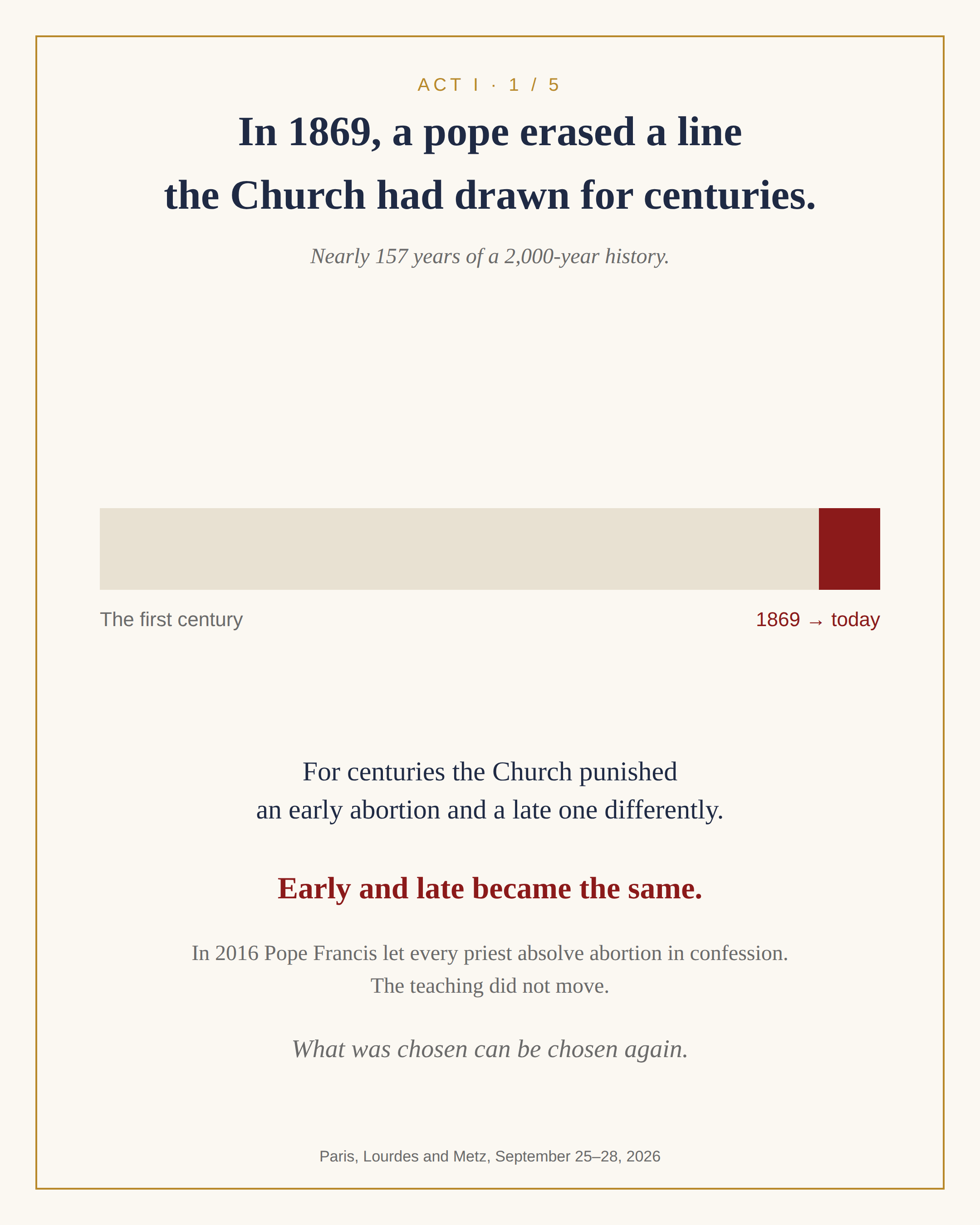
It has, as a moral teaching, since the first century, and nothing here denies that. In Paris on September 25 the Pope called the protection of the right to life the foundation of every other human right, without naming abortion. What changed over the centuries was whether an early abortion counted as homicide, and how heavily the Church's own law punished it.
"You are asking the Church to change its teaching."
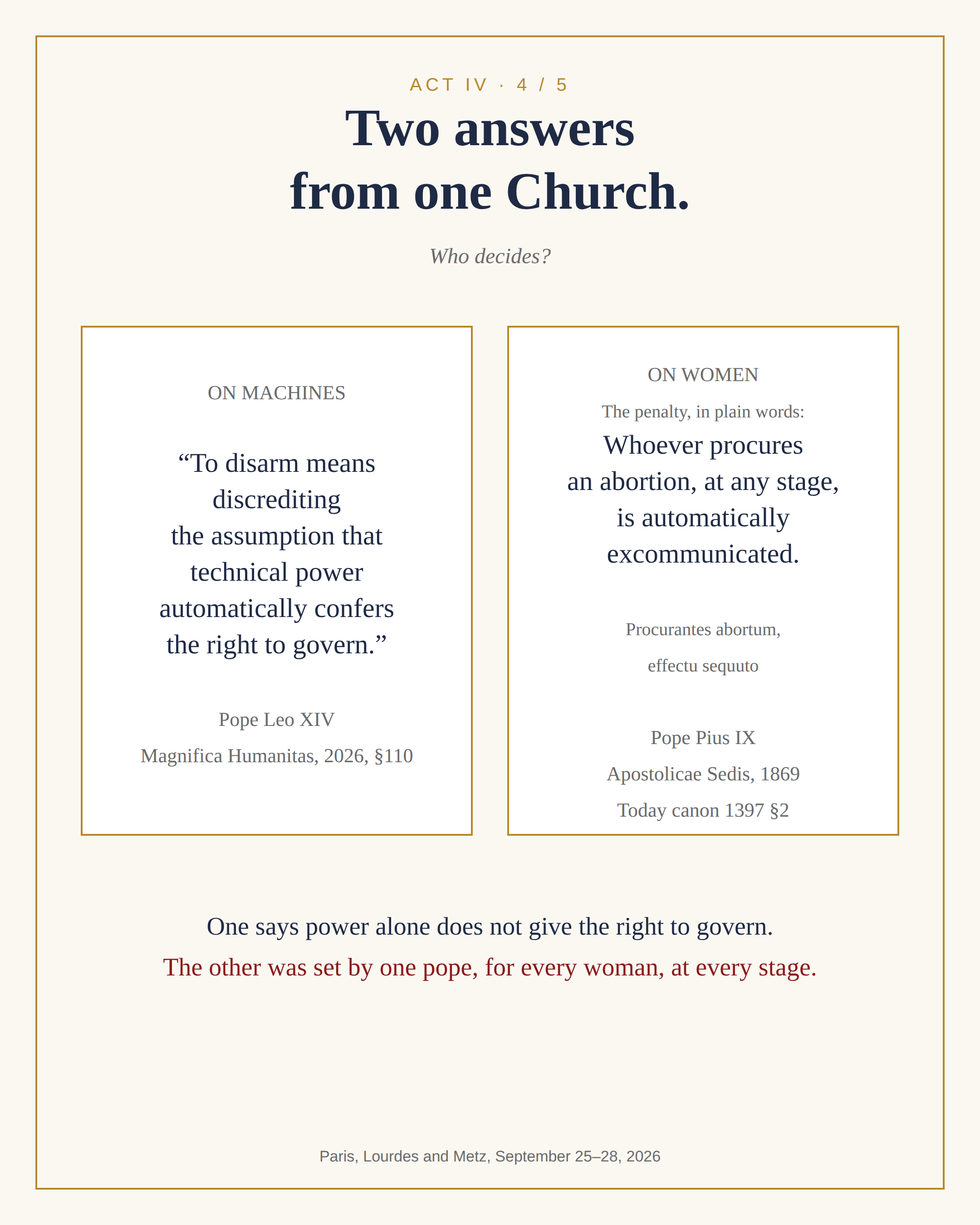
The ask is narrower than that: that a pope lift the automatic penalty set for every stage in 1869, and that the Church stop requiring every state to punish what it considers a sin, a distinction its own greatest theologian drew, because what the Church teaches its members and what it demands of every state are two different things.
"Aquinas himself says the law should forbid murder."
He does, in the same passage, and he also held that an early abortion was not homicide, because he believed the soul arrived later in pregnancy. That was the line the Church kept until 1869, so the Summa supports this argument only when it is read alongside that history; read on its own it cuts the other way, and it should be read honestly.
"Human laws do not forbid all vices, from which the virtuous abstain, but only the more grievous vices, from which it is possible for the majority to abstain; and chiefly those that are to the hurt of others, without the prohibition of which human society could not be maintained: thus human law prohibits murder, theft and such like."
From the Summa Theologiae I-II, question 96, article 2
"The health and life of the mother is already covered."
It is, and it is beside the point, because the standard here is her freedom, which comes before her health and before any exception. An exception is what you grant to someone who does not hold the right.
"You are using the abuse crisis against the Church."
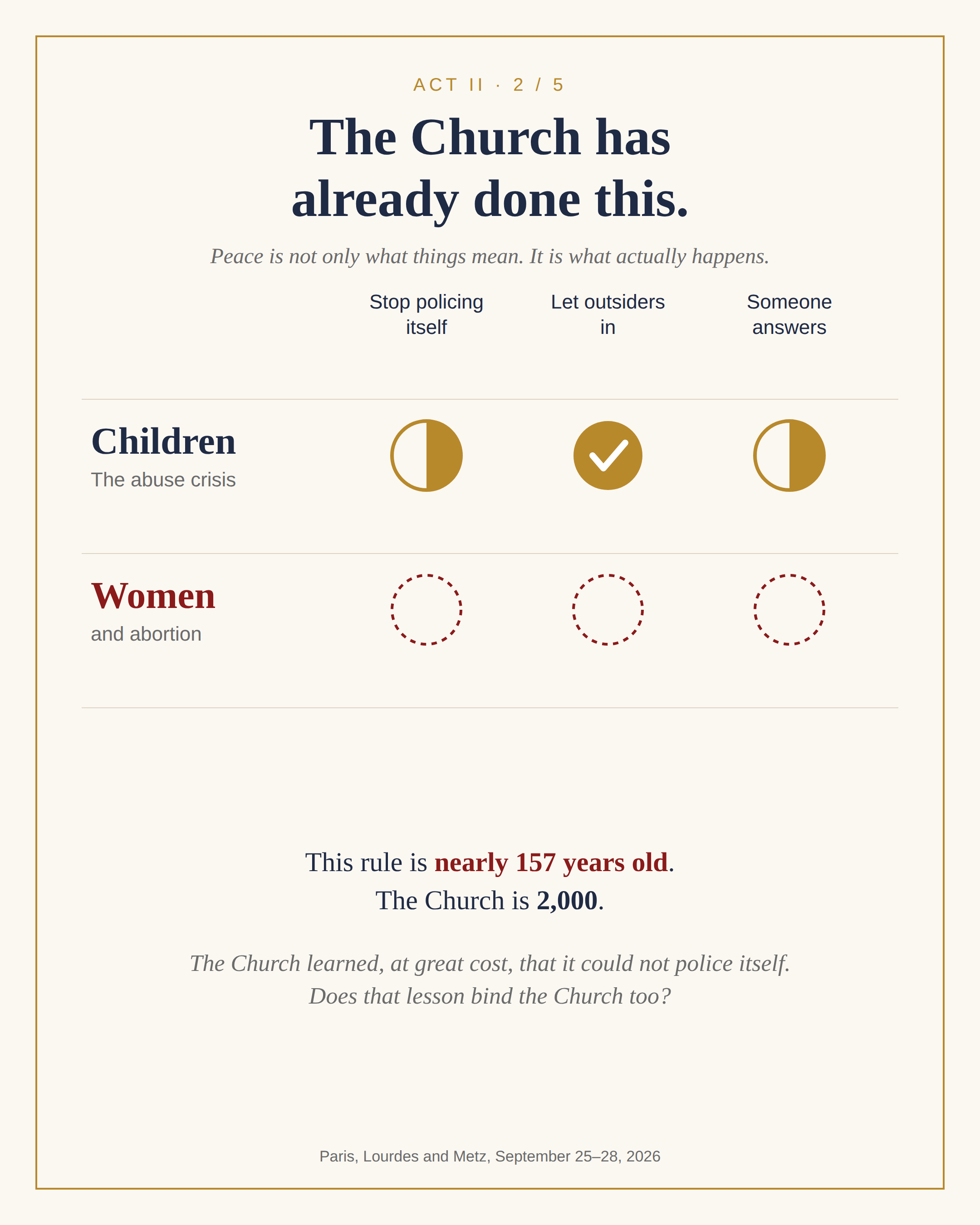
Nothing here claims that the teaching on abortion caused the abuse. The claim is that both were handled in the same closed room, under the same habit of answering to no one, and that the Church has already begun to open that room for one of them.
"You are not a theologian."
That is true, and this is a prayer from the pews, offered at a moment when the answer matters more than the person praying it.
"This is American politics dressed as theology."
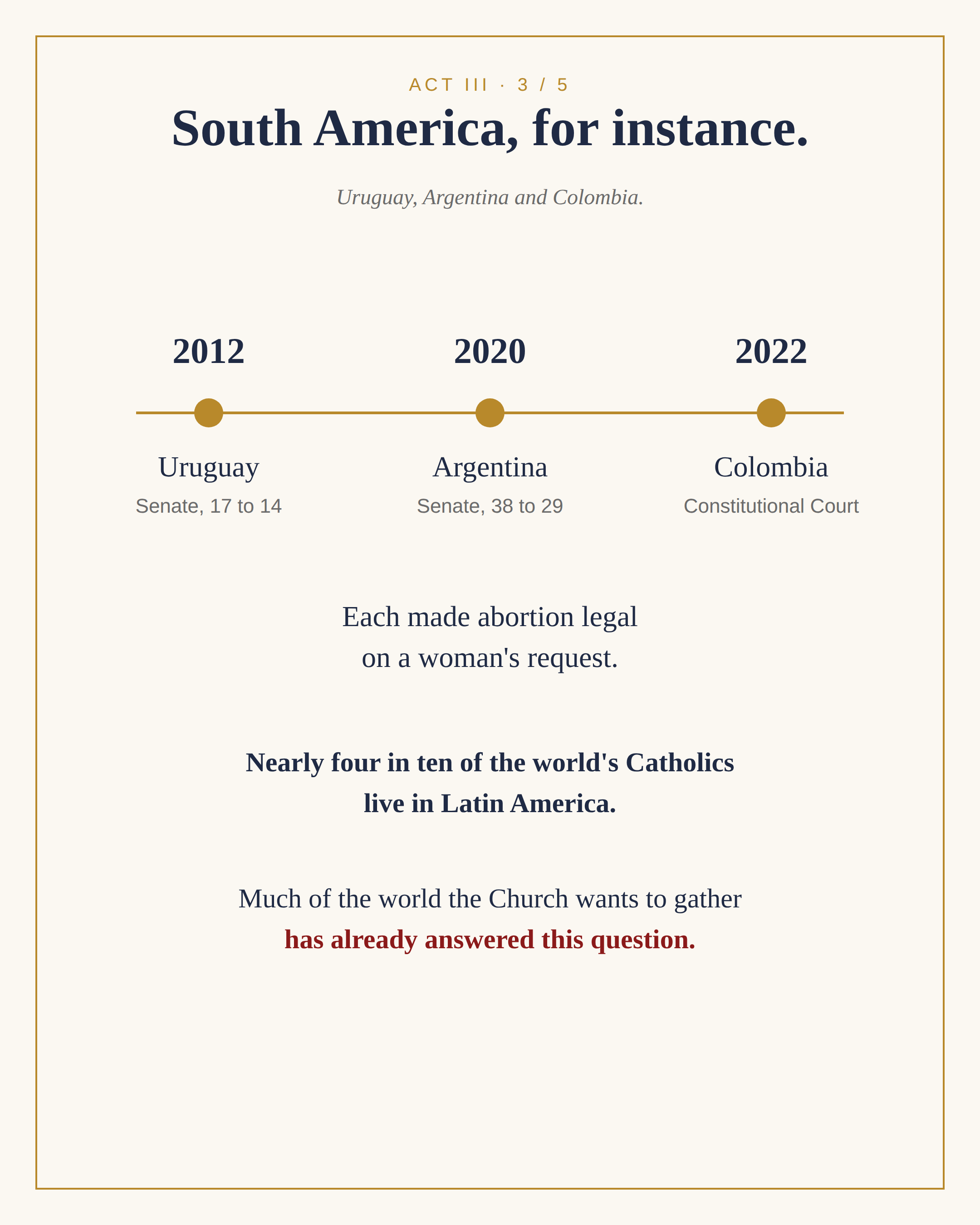
France put it in its constitution in 2024, and voters in several American states have voted on it directly since 2022. The ask is that the Church see the world it hopes to bring together as that world actually is.
The earlier case, September 9, 2026 (a working draft) · The history